https://www.cexpet.com/titians-venus-of-urbino-unveiling-its-enduring-mystery-and-artistic-legacy/
Titian’s “Venus of Urbino” was a near-explosive bombshell in art history. It subverted the traditional image of the aloof, divine Venus, ushering the goddess into the warmth and even privacy of the boudoir—and she dared to look directly at the viewer. Yes, you read that correctly: her gaze is both frank and confident, a silent invitation to meet her gaze. It is this direct, candid gaze that has ignited centuries of endless debate about beauty, desire, and the concept of seeing. This article attempts to delve deeper into the secrets of this famous painting, exploring its rise from a personal gift to a masterpiece that has influenced the entire history of art.
1. What is the Venus of Urbino?
This painting, created by Titian in 1534 at the height of the Venetian Renaissance, was commissioned by Guidobaldo II della Rovere, Duke of Urbino, likely as a gift for his new wife. Today, it rests peacefully in the Uffizi Gallery in Florence, undisputedly the museum’s treasured treasure.
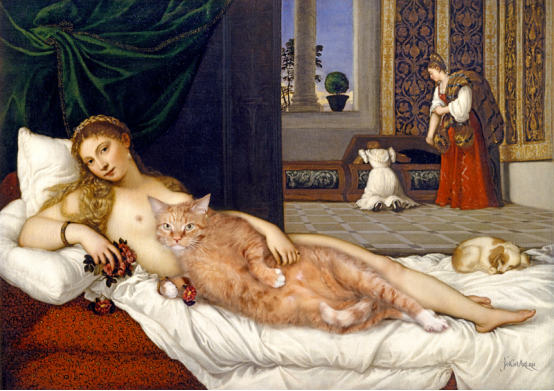
In the painting, a naked young woman lies on a couch covered in white sheets, relaxed and elegant. Behind her, a deep interior space appears, two maids rummaging through clothing, and outside the window, a tranquil Italian garden appears. While seemingly tranquil, this scene holds hidden allure and tension—you can almost sense the subtle atmosphere: comfortable, seductive, and subtly private.
2. Myth or reality? Goddess or mortal?
The paradox of title and content
The painting is titled “Venus,” referring to the Roman goddess of love and beauty. Traditionally, Venus is depicted in the clouds, in temples, or in the countryside, maintaining a sacred distance. However, Titian breaks this convention: he places her in the bedroom of a wealthy Venetian family. The title and the painting create a paradox: is she a lofty goddess, or a real, mortal woman?
The model’s true identity
It’s widely believed that the woman depicted in the painting is likely a Venetian courtesan (cortigiana), renowned for her talent, beauty, and eloquence, often serving as a muse for artists and aristocrats. However, historical sources are unclear about her identity. This ambiguity contributes to the painting’s allure: it serves as both a symbol of idealized beauty and a direct reflection on the allure of real women.
3. Symbolic Decoding: Every detail in the painting whispers something
Titian did not arrange the elements of the painting randomly; every detail is full of meaning, forming a layered sense of narrative.
‘s most striking aspect is her direct gaze . She doesn’t shyly avert her gaze, nor does she lose herself in her own world. Instead, she gazes at you—the viewer—with a frank, yet slightly provocative gaze. This momentary gaze transforms her from a mere object being observed to a self-aware “viewer,” inviting you to participate in an equal and intimate visual exchange.
Sleeping Puppy : At her feet, a small dog curls up in a deep sleep. Dogs symbolize fidelity in Western culture. In the context of marriage, it may hint at her fidelity to her husband, echoing the painting’s context as a wedding gift. You can’t help but notice this small detail, as if it silently tells a story.
Roses and Flowers in Hand : The roses in the maid’s hands and between Venus’ fingers are her sacred flowers, symbolizing the transience of love and beauty. They remind the audience that beauty and love are not eternal and must be cherished and protected.
Maids behind : In the background, two maids are busy sorting the cassone, which contrasts with the leisure of the woman in the foreground, creating a quiet and lifelike atmosphere.
The laurel tree outside the window : Laurel symbolizes virtue and eternal honor, which may imply that the woman in the painting is not only beautiful but also has inner virtue.
These details weave together a complex narrative: she could be a celebrated bride or the embodiment of beauty and love. This multiplicity of possibilities is the essence of the work’s allure.
4. Pioneering and Influence
The secularization of “Venus of Urbino” is truly revolutionary. Titian brought the mythical goddess down to earth, imbuing her with warmth and desire. While the composition draws on Giorgione’s “Sleeping Venus,” the awake, self-aware Venus is entirely Titian’s creation. This emphasis on female subjectivity made it a watershed moment in Western art history.
Édouard Manet : In 1863, French realist master Manet directly echoed this painting’s composition in his Olympia. Olympia’s bold gaze directly at the viewer sparked even greater controversy and is considered one of the beginnings of modern art.
Later paradigms : This painting established the basic template for the reclining female nude, and countless later masters such as Rubens and Goya have responded to or challenged this composition in different ways.
As a researcher of artistic content, I have consulted more than 20 academic papers and museum materials, and believe that the charm of this painting lies in its “ambiguous complexity”: it wanders between the sacred and the secular, love and desire, passivity and activity. This ambiguity has allowed it to spark heated discussions after hundreds of years.
5. Conclusion: A complex and confident female image
The Venus of Urbino is more than just a depiction of a beautiful woman; it explores the very concept of seeing. Titian created a woman with a clear sense of self-awareness who dares to engage in visual communication with the audience, breaking the boundaries between the inside and outside of the canvas.
It is both an ideal of beauty and an object of desire; a symbol of marriage and a symbol of worldly sentiment. It is this multiplicity of interpretations that makes it one of the most captivating and enduring masterpieces of Renaissance art. If you want to understand the essence of Renaissance art, you can’t go wrong by starting with this painting.
https://www.cexpet.com/titians-venus-of-urbino-unveiling-its-enduring-mystery-and-artistic-legacy/
